

Help for Gambling Addiction in India: A Practical Guide
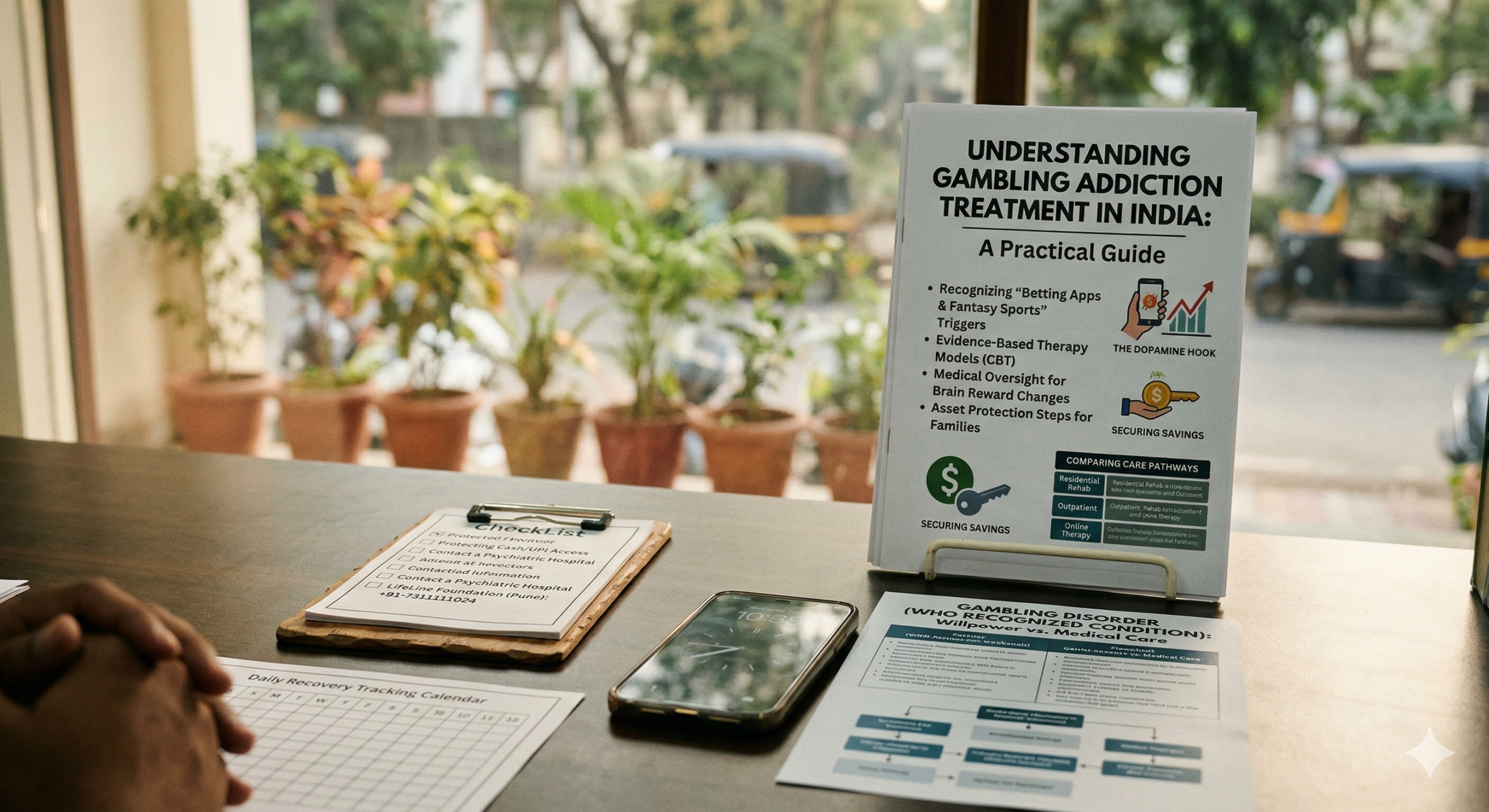
Gambling often starts harmlessly in India—perhaps through a fantasy sports app, a game of online rummy, or offshore betting sites. Because these are easily accessed on your phone, many people do not realize they have a problem until it is too late.
The World Health Organization (WHO) officially recognizes Gambling Disorder as a serious medical condition. It is not just “bad behavior” or a lack of willpower. It is a clinical issue that hijacks the brain’s reward system, triggering the same dopamine hits as drugs or alcohol.
Is it a Problem? Check These Signs Tonight
If you or a loved one are trapped in a cycle of chasing losses and hiding debts, you must act now. Use these “red flags” to decide if you need professional help. To understand the full scale of the issue, you can read the Top 10 Signs of a Gambling Addiction.
Behavioral Changes
- Constant Preoccupation: Spending hours on betting apps, even during work or family time.
- The Dopamine Hook: Needing to bet larger amounts of money to feel the same “rush” or excitement.
- Chasing Losses: The dangerous habit of betting more money specifically to win back what was lost.
- Lying and Hiding: Keeping phone screens hidden or lying about where the money went.
Financial Warning Signs
- Unexplained ATM withdrawals or UPI transfers to unknown names.
- Taking “top-up” personal loans or exhausting credit card limits.
- Selling family gold or jewelry to cover “urgent” expenses.
Treatment Options: Finding the Right Care
| Treatment Type | Best For | What to Expect |
|---|---|---|
| Residential Rehab | Severe cases, high risk of relapse, or suicidal thoughts. | 30–90 days stay in a safe, phone-free environment with 24/7 care. |
| Outpatient Therapy | Mild to moderate cases with a stable home environment. | Weekly visits to a clinic for Cognitive behavioral therapy (CBT). |
| Teletherapy (Online) | Remote areas or those seeking maximum privacy. | Video calls with a psychologist to build coping skills from home. |
| Support Groups | Ongoing recovery and long-term accountability. | Meetings like Gamblers Anonymous (GA) to share experiences with peers. |
How Treatment Works: The Medical Approach
Since gambling addiction changes how the brain processes rewards, “just quitting” is very difficult. Professional treatment in India usually includes:
- Therapy: Specialists help you identify “triggers” and stop the “gambler’s fallacy” (the false belief that a “big win” is coming soon).
- Psychiatric Care: Doctors may use medications to balance dopamine levels or treat underlying anxiety and depression.
- Asset Protection: For more on facility-level planning, see Addressing the Need for Rehabilitation Centres in Treating Gambling Addiction.
How to Choose a Quality Provider
When calling a hospital or rehab center, use this checklist:
- Staff: Do they have a full-time psychiatrist and certified clinical psychologists?
- Method: Do they use evidence-based treatments like CBT?
- Family Support: Do they offer counseling for family members who are also suffering?
- Aftercare: Do they provide a written plan to prevent relapse?
Reviewing official treatment recommendations for gambling disorders can help you ask the right questions during your first call.
Immediate Safety Steps for Families
- Cut Off the Money: Immediately take control of all bank accounts and gold. Change your UPI and net-banking passwords.
- Monitor Devices: Look for apps related to fantasy sports or “trading” platforms being used for gambling.
- Contact Experts: Reach out to specialized facilities like LifeLine Foundation (near Pune, +91-7311111024) or a nearby psychiatric hospital for an assessment.
Medical Disclaimer: This guide is for informational purposes only. Gambling disorder is a medical condition that requires professional diagnosis. Always consult a psychiatrist or a qualified health provider. In case of a mental health emergency, contact government helplines or emergency services at 112.